Psychology 101
The MBTI of Historical Figures: How Great Minds Mirror Modern Personality Types
The CQ Team · 4 min read · Mar 21, 2025
Unlocking the Personality DNA of the Past Can we decode the personalities of history’s most iconic leaders and thinkers using MBTI? While we can’t hand Cleopatra a personality test or invite da Vinci to take an online quiz, we can analyze their behavior, leadership styles, and decisions to hypothesize their cognitive preferences. By aligning known…
Can we decode the personalities of history’s most iconic leaders and thinkers using MBTI? While we can’t hand Cleopatra a personality test or invite da Vinci to take an online quiz, we can analyze their behavior, leadership styles, and decisions to hypothesize their cognitive preferences.
By aligning known traits with the MBTI framework—based on Carl Jung’s psychological functions—we begin to see patterns. This speculative exploration reveals how extraversion or introversion, intuition or sensing, thinking or feeling, and judging or perceiving shaped history’s most extraordinary lives.
The Myers-Briggs Type Indicator (MBTI) is a personality typing system that categorizes individuals into 16 unique types, each based on combinations of four dichotomies:
Each type has a dominant cognitive function supported by auxiliary, tertiary, and inferior functions. Though MBTI analysis of historical figures is speculative, it offers a powerful lens to understand their choices, charisma, and legacies.
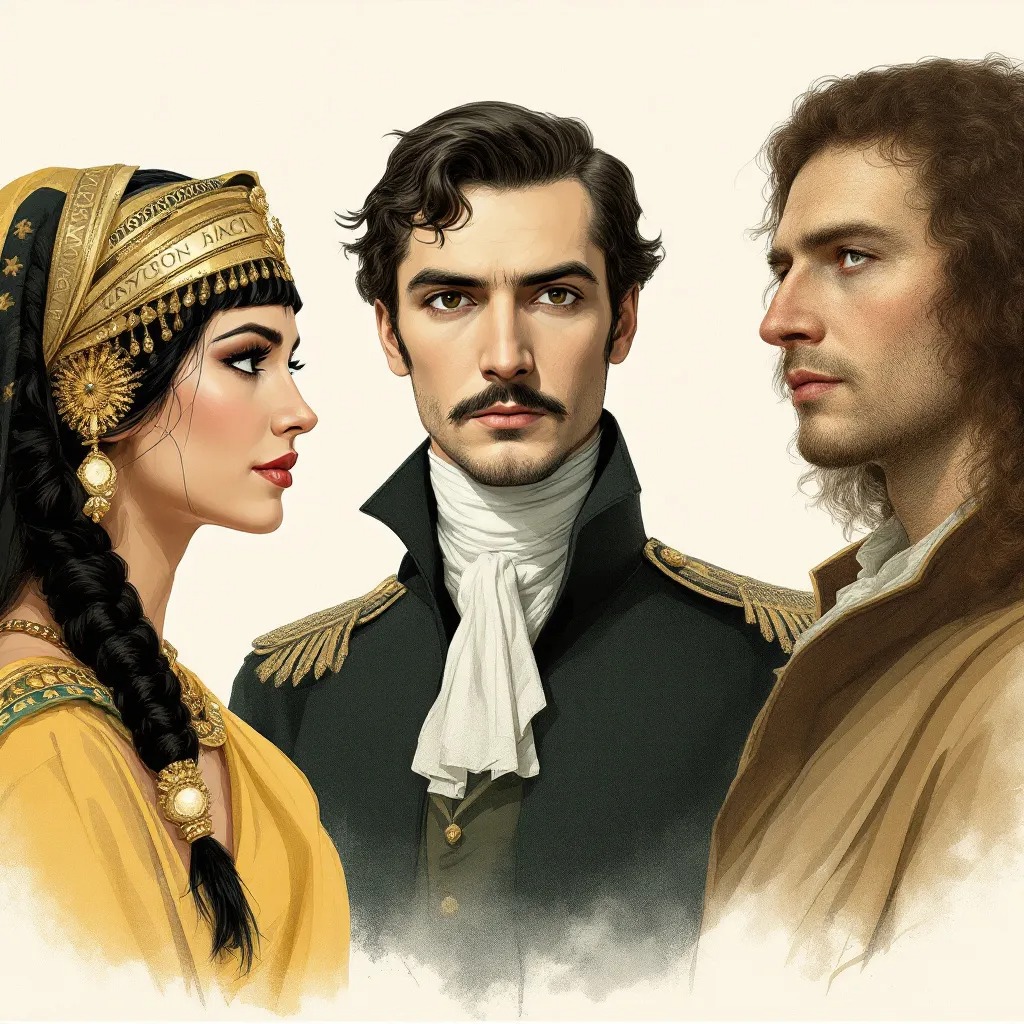
Cleopatra VII of Egypt was no ordinary monarch—she was a political visionary, polyglot, and tactical genius. Her blend of charm, innovation, and adaptability aligns well with the ENTP profile.
She reshaped Egypt’s fate not by brute force but by forging strategic alliances with Julius Caesar and Mark Antony—hallmarks of ENTP diplomacy and ingenuity.
Napoleon’s relentless ambition, precise planning, and battlefield adaptability point clearly to ENTJ—the Commander archetype.
His ability to consolidate power and reform legal, economic, and educational systems reveals the hallmark of a structurally brilliant ENTJ leader.
Leonardo da Vinci’s staggering range of interests—from anatomy to flight to painting—embodies the INTP’s philosophical exploration and technical brilliance.
His notebooks, inventions, and masterpieces reflect an insatiable desire to understand how the world works—a pure expression of INTP cognition.
Churchill’s legendary speeches, razor-sharp wit, and adaptability in wartime align with the ENTP’s love of persuasion, ideas, and challenge.
He didn’t just lead—he reframed the narrative, using visionary rhetoric and strategic irreverence to shape the morale of a nation.
Marie Curie’s breakthroughs in radioactivity reveal the INTJ’s signature blend of vision, logic, and personal conviction.
Her refusal to yield in male-dominated institutions and her unrelenting scientific drive reflect the INTJ’s ability to channel solitude into brilliance.
Lincoln’s introspective wisdom, moral leadership, and unifying vision match the INFJ archetype—the Advocate.
His empathy-driven policies and clear-sighted navigation of national trauma exemplify INFJ integrity and foresight.
Each MBTI type brings unique strengths to leadership:
While MBTI cannot replace historical nuance, it offers a deeper understanding of how personality shapes leadership, legacy, and innovation.
When we look into the personalities of historical giants, we don’t just decode their greatness—we reflect on our own.
History doesn’t just inform us—it mirrors us. Understanding how MBTI types shaped leaders helps us shape ourselves, with intention, vision, and authenticity.
Curious where your needle sits? Take any assessment free and find out in minutes.
Take a test →